Need help? Call Us Now :
+91-8808088807

Weed Harvester
Weed Harvester
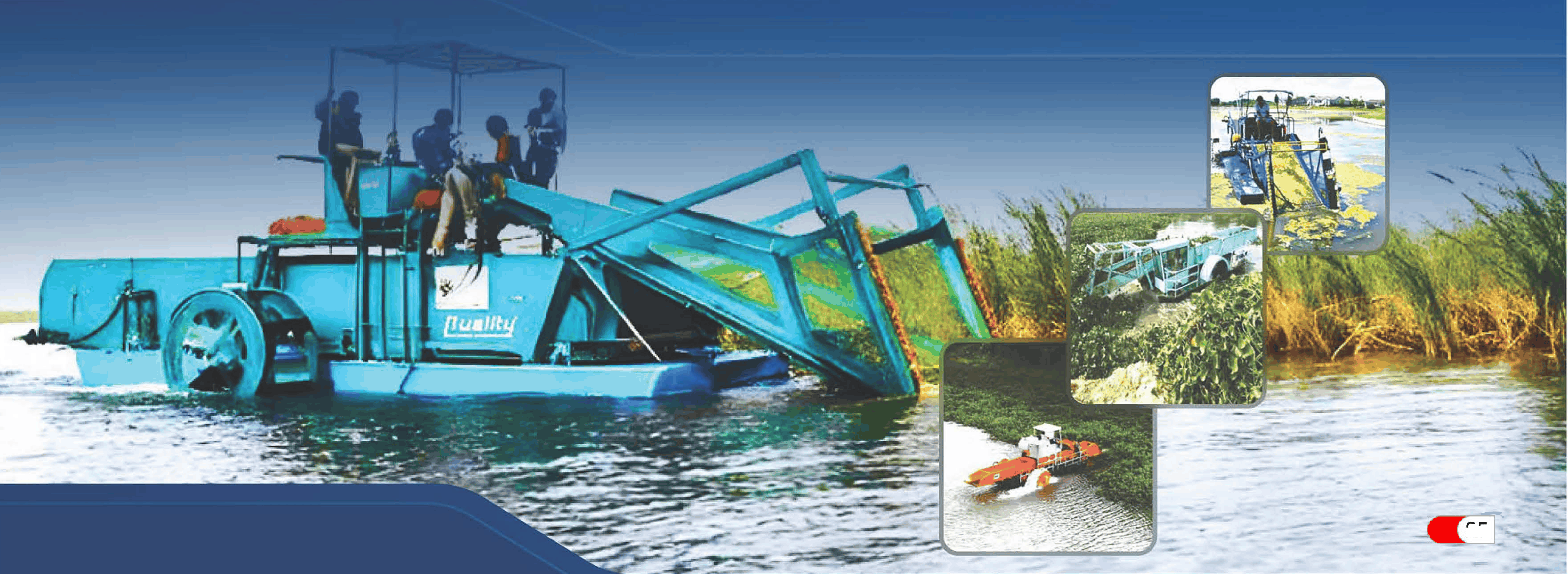
Our Aquatic Weed Harvester is designed and developed by our specialized machines designed for the management and control of unwanted aquatic vegetation. These machines are essential for maintaining water bodies, preventing the spread of invasive species and ensuring the health of aquatic ecosystems. We design and manufacture a wide range of aquatic weed harvesting and aquatic trash removal systems including harvesters, skimmers, transport barges, shore conveyors and weed crushing machine. Aquatic weeds are plants that grow in or around water bodies and can become problematic due to their rapid growth and invasive nature. These weeds can be native or non-native species, but they typically refer to plants that interfere with human activities, ecosystem health, or both.
Operational Benefits of Weed Harvester-
- Efficiency: High cutting and crushing capacity reduces the time and labour required for aquatic weed management
- Versatility: Can handle various types of aquatic vegetation, including tough, invasive species
- Mobility: Easy to transport and deploy in different water bodies
- Sustainability: Helps maintain the ecological balance of water bodies by controlling excessive weed growth.
Application
Municipal Water Bodies
Maintenance of lakes ponds and reservoirs
Irrigation Channels
Keeping canals and ditches clear to ensure efficient water flow.
Industrial Waterways:
Ensuring clear passages for industrial operations and preventing clogging of intake pipes.
Recreational Areas:
Maintaining cleanliness and accessibility of water bodies in parks and resorts.
Types of Weeds
- Submerged Weeds
- Floating Weeds
- Emergent Weeds
- Floating Leaf Weeds
- Algae Weeds
- Invasive Weeds
COMPONENTS & FEATURES
| Category | Parameter | Specification / Description |
|---|---|---|
| Hull & Frame | Material | Steel or aluminium, suitable for aquatic environments |
| Dimensions | Varies based on capacity and design; typically, 20–60 feet in length | |
| Cutting Mechanism | Cutter Bar | Equipped with sharp, replaceable blades |
| Cutting Width | Typically, 6–12 feet for efficient coverage | |
| Cutting Depth | Adjustable to reach vegetation at different depths | |
| Conveyor System | Primary Conveyor | Transfers cut vegetation from the cutter bar to the storage area |
| Secondary Conveyor | Transfers collected vegetation to the collection bin or onto shore | |
| Material | Corrosion-resistant materials such as stainless steel or reinforced plastics | |
| Storage & Crushing | Storage Bin | Designed to hold harvested vegetation; capacity typically ranges from 500–3,000 cubic ft. |
| Crusher | Integrated crushing mechanism to reduce the volume of collected vegetation | |
| Crusher Type | Hammer mill or roller crusher | |
| Crushing Capacity | Several tons per hour, depending on model and configuration | |
| Propulsion & Navigation | Engine | Diesel or electric engine, typically ranging from 50–200 HP |
| Propulsion System | Paddle wheels, propellers or water jets | |
| Steering | Hydraulic or electric steering system for precise manoeuvring | |
| Control System | Operator Cabin | Enclosed or open cabin with ergonomic operating controls |
| Automation | Automated control systems for cutting and harvesting operations may be provided in certain models | |
| Monitoring | Real-time monitoring of engine performance, cutter depth and conveyor status | |
| Safety Features | Emergency Stop | Easily accessible emergency stops controls |
| Buoyancy Aids | Built-in flotation devices to assist in maintaining buoyancy | |
| Protective Guards | Guards around moving components for operator safety | |
| Environmental Considerations | Engine Emissions | Low-emission engine options to minimise environmental impact |
| Debris Management | Collection and disposal system designed to minimise re-entry of cut vegetation into the water |